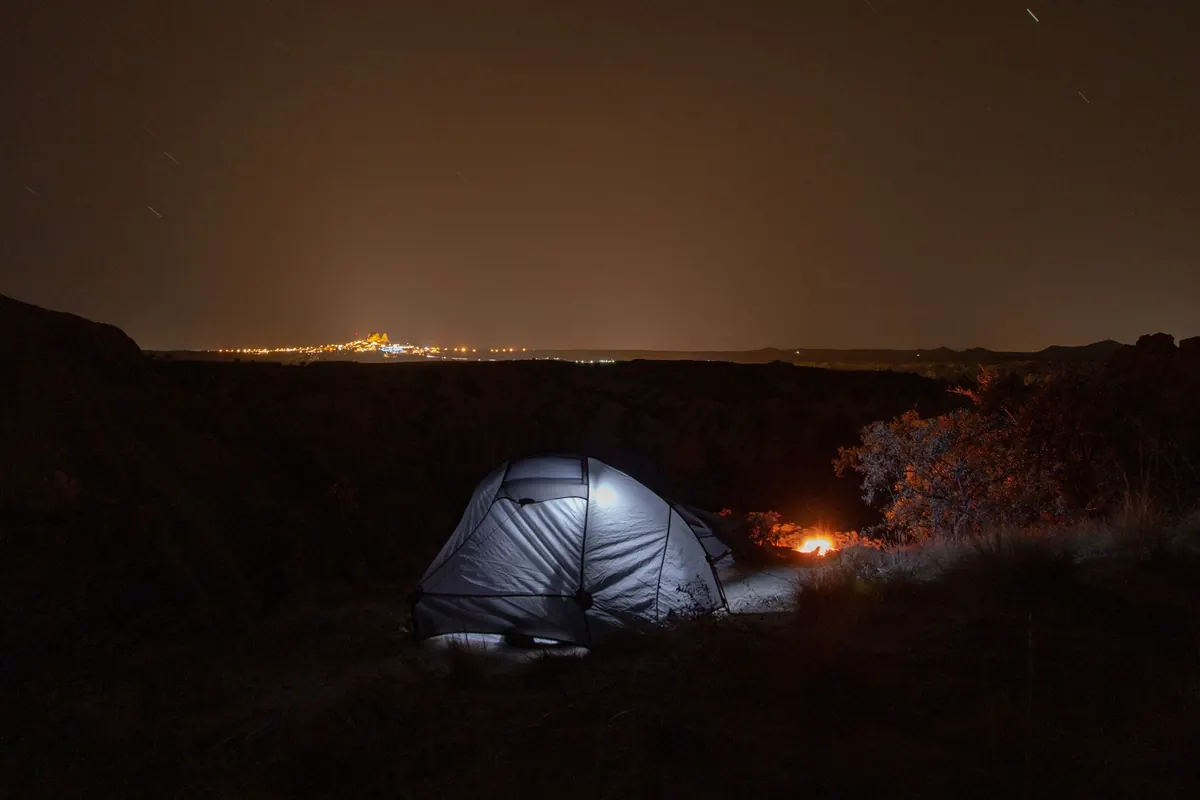
You unzip the tent on a crisp morning, ready for coffee and sunrise, and there it is: a film of water on the inside of the fly, maybe a few drops hanging over your sleeping bag. Nothing leaked. It didn't rain. So where did all that water come from?
It came from you. Every camper exhales roughly a cup of water vapor overnight, and cooking, damp clothes, and wet ground add more. That moisture has to go somewhere. When it can't escape, it condenses on the coldest surface it can find—usually the inside of your tent. Understanding that simple mechanism makes condensation predictable, and predictable problems are fixable.
What Actually Causes Tent Condensation
Condensation happens when warm, moist air meets a surface cool enough to wring the water out of it. In a tent, three things line up almost every night:
- Moisture sources inside. Your breath is the big one, but a pot of boiled water, a wet rain jacket, damp socks, and even a soggy dog all release vapor through the night.
- A temperature difference. As the air outside cools after sunset, the tent fabric—especially the outer fly—drops below the dew point. Moist air inside touches it and leaves water behind.
- Poor airflow. A sealed-up tent traps that moist air. The moisture has nowhere to go, so it settles on the walls, the ceiling, and sometimes your sleeping bag.
Notice what's not on that list: a defective tent. Even a high-end shelter condenses if you seal it shut on a still, humid night. Condensation is a physics problem, not a quality problem.
Why Some Nights Are Worse Than Others
Still air is the enemy. A breeze constantly swaps the humid air inside your tent for drier air outside. On calm nights, that exchange stops, and moisture piles up. Cold, clear nights are worse than mild, cloudy ones because the fly radiates heat into the sky and gets extra chilly. Camping near a lake, in a river valley, or on wet grass stacks humidity on top of everything else—you're essentially sleeping inside a cloud that hasn't formed yet.
Pick a Smarter Campsite
Where you pitch can cut condensation before you even open your sleeping bag.
- Avoid low ground. Cold, damp air drains downhill and pools in hollows and valley bottoms. Camp slightly uphill or on a bench above the valley floor.
- Stay away from water's edge. Lakes, streams, and marshy ground pump moisture into the air all night. A spot 30 meters back from the shore is noticeably drier.
- Skip tall grass and wet meadows. Dew-soaked ground adds vapor right under your floor. Bare, dry ground or pine duff is better.
- Look for a little breeze, not a gale. A site with mild air movement stays drier. Just make sure it's sheltered enough that you're not fighting wind all night.
- Use tree cover wisely. A canopy reduces radiative cooling of your fly, which can mean less condensation—though it also blocks the morning sun that would dry things out.
Ventilation: The Fix That Does Most of the Work
If you change one habit, make it this one: keep air moving through the tent, even when it's cold. A stuffy tent is a wet tent.
Open the vents, all of them
Most tents have mesh panels, low vents near the floor, and high vents at the top of the fly. Open the high vents every night. They let warm, moist air rise and escape—the same principle as a chimney. In rain, many high vents are designed to stay open under a hood, so use them.
Create cross-flow
Two openings beat one. Crack the door on the sheltered side and leave a vent open on the opposite side. Even a small, steady trickle of air makes a visible difference by morning.
Don't over-batten the fly
Stake the fly so it doesn't press against the inner tent. That air gap between the two layers is insulation for your comfort and a drainage path for moisture—if the fly touches the inner wall, condensation transfers straight onto your sleeping bag. In calm, dry weather, you can even pitch fly-only or leave the inner door open for maximum airflow.
Rule of thumb: if the air inside your tent feels stuffy when you zip up for the night, it will feel wet when you wake up.
Manage the Moisture You Bring In
Ventilation handles the vapor you can't avoid. These habits handle the rest:
- Breathe out, not in. You can't stop exhaling, but you can avoid burying your face in your sleeping bag. A breathable bag liner or leaving your nose out reduces how much vapor gets trapped against the fabric.
- Leave wet gear outside. Damp jackets, boots, and packs go in the vestibule, not the sleeping area. If they must come in, keep them in a dry bag.
- Cook outside. Boiling water inside a closed tent dumps a surprising amount of steam into your sleeping space. Cook in the vestibule with the door open or outside entirely—and never use a stove in a fully closed tent, both for moisture and for carbon monoxide safety.
- Dry the tent before packing. A tent packed away damp starts the next night with moisture already in the fabric. Air it out at lunch if you can, or dry it fully at home before storing.
A Note on Single-Wall Tents
Single-wall tents are light, but they skip the double-layer trick that keeps condensation off your bag. They rely entirely on ventilation, and in humid conditions they will get wet inside. If you use one, treat airflow as non-negotiable and carry a small cloth to wipe the walls before you pack up.
When You Wake Up Wet Anyway
Even with good habits, some nights win. If you wake to a wet tent, don't shake it out over your sleeping bag—wipe the walls with a light cloth or sponge first, then pack the tent in its own stuff sack away from your dry gear. At the next stop, pitch it in the sun with the doors open and let it dry completely. Storing a tent damp is how you get mildew, a smell that never really leaves.
Condensation isn't a sign you bought the wrong tent or pitched it badly. It's a sign that warm, wet air met a cold surface with nowhere to go. Give that air an exit, start with a drier campsite, and keep your wet layers out of the sleeping space. Do those three things and most mornings you'll unzip the door to a dry tent—and get straight to the coffee.
Photo: pasja1000 / Pixabay