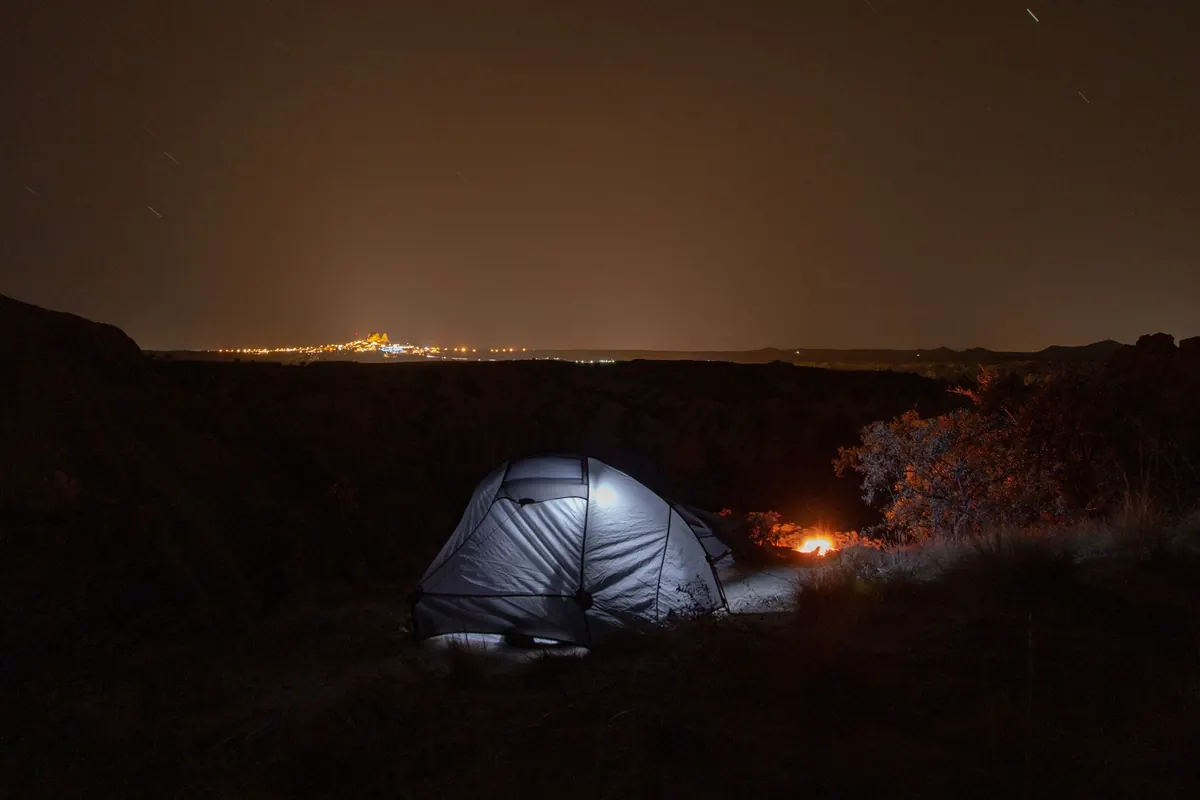
You have a trunk, a free weekend, and a tent-sized hole in your gear closet. Two options keep surfacing in your search results: a car camping tent and a backpacking tent. They look vaguely similar in photographs. They are built for completely different jobs, and picking the wrong one first is the quickest way to spend a whole season mildly annoyed.
The choice is usually easier than the internet makes it sound. Your first tent should match the camping you will realistically do over the next year, not the month-long trail adventure you are daydreaming about and not the eight-person palace you would need a second vehicle to transport. Here is how the two categories actually differ, and how to decide.
Start With How You'll Actually Camp
Car camping means your site sits within a short walk of your vehicle. You can carry a heavy load in one trip, or make three trips and nobody cares. Because weight is nearly irrelevant, tent designers spend the budget on comfort: taller ceilings, wider floors, bigger doors, more mesh for ventilation, and sturdy poles that shrug off a gusty afternoon.
Backpacking means everything you own for the night is on your back, and every item competes for the same limited space and energy. Designers build those tents around a single constraint: less. Less fabric, less pole, less packed volume, and a lot more attention to how it performs when the weather turns and you have nowhere else to be.
Try this before you buy anything. Write down the last three camping trips you took, or the three you have genuinely penciled in. If you drove to a site and walked a few steps to pitch, you are a car camper. If you hiked in with a pack, you need backpacking gear. Be honest here — buying a two-pound tent for drive-up sites is like buying a sports car to haul lumber. It works, but you paid a lot for capability you never use.
Weight and Packed Size
This is the widest gap between the two categories. A four-person car camping tent commonly lands somewhere between eight and fifteen pounds, and it packs down to roughly the size of a large duffel bag. A two-person backpacking tent often weighs three to five pounds and stuffs into a sack about the size of a loaf of bread.
Those numbers only mean something in context. Twelve pounds of tent is a non-issue when your car is forty feet away. The same tent at mile six of a climb, with a sleeping bag, stove, and food already on your back, becomes the thing you resent most about the entire trip. Weight is not a virtue by itself — it is a trade-off, and it only pays off when you are the one carrying it.
Packed size matters for car campers too, just less dramatically. Two tents, a cooler, a stove, and luggage for four people add up fast in a compact car. Check the packed length against your trunk before you fall in love with a design.
Space and Livability
Car camping tents are rooms. A four-person model often has a peak height over five feet, which means you can stand hunched, sit upright in a camp chair, and change clothes without a yoga routine. Gear lives inside with you. A dog can claim a corner. On a rainy afternoon, that extra volume is worth every ounce you never had to carry.
Backpacking tents are shelters. Peak height usually sits around three to four feet, the floor tapers toward the feet, and you sleep rather than hang out. Two people in a two-person backpacking tent are two people sharing a very deliberate space.
What "sleeps four" actually means
Ignore the number on the box until you translate it. Tent capacity is based on sleeping pads laid side by side with no gaps and no gear. A "four-person" tent is comfortable for two adults plus a child and some bags, or cozy for three adults. If you want room to move, subtract one from the label. Backpacking tents follow the same rule, only more strictly.
Vestibules are the quiet hero
On backpacking tents, the vestibule — that covered porch outside the door — is where your boots, pack, and wet rain jacket live. A larger vestibule can matter more than a few extra inches of floor. Car camping tents usually solve the same problem with sheer interior volume, plus a screen room or awning on some models.
Durability and Weather Protection
Heavier tents are not automatically tougher, but they do tend to use thicker fabrics, beefier zippers, and stronger poles. That mass helps in wind, and the extra material tolerates being dragged across gravel, folded hastily, and stored in a hot car. A car camping tent can last a decade of casual use with basic care.
Backpacking tents use lightweight fabrics and thin aluminum poles to shave grams. They are durable in the ways that matter on trail — rainfly coverage, taped seams, a bathtub floor that keeps groundwater out — but they are less forgiving of abuse. Pitch them on sharp rocks and you will learn about abrasion the hard way.
Whichever you choose, these habits matter more than the spec sheet:
- Always use a footprint or a ground cloth cut slightly smaller than the floor, so it does not catch and channel rainwater underneath.
- Stake out every guyline in wind. A flapping rainfly is a torn rainfly.
- Seam-seal or check factory sealing before your first wet trip.
- Dry the tent completely at home before storing it. Mildew ends tents early.
- Camp in the open rather than under dead branches, and look up before you pitch.
Where the Money Goes
Entry-level car camping tents are the cheapest way into camping, because the materials are simple and weight does not constrain the design. You can get a decent, roomy shelter for the price of a nice dinner out for two — about the same money that buys a single lightweight backpacking pole set.
Backpacking tents cost more for less fabric. You are paying for engineering: fabrics with a high strength-to-weight ratio, poles that bend without snapping, and patterns that squeeze maximum interior volume out of minimum material. A mid-range backpacking tent will typically cost several times what a comparable-capacity car camping tent does.
The practical upshot: if your budget is tight and your trips involve a vehicle, put your money into a roomy car camping tent and spend the savings on a good sleeping pad. If you have already started hiking in, save longer and buy the backpacking tent once.
The One-Tent Decision
If you can only buy one tent this year, use these rules of thumb:
- Buy for the next twelve months of trips, not for a bucket-list hike three years away.
- Choose a car camping tent if most trips involve driving, if you camp with family or friends, or if you want to stand up and spread out.
- Choose a backpacking tent if you hike in even occasionally, if you are short on storage space at home, or if you camp solo and want something you can carry and pitch alone.
- Consider a lightweight three-person backpacking tent as a middle path — it works for both styles, just without the headroom or the bargain price.
Before You Click Buy
Measure your trunk or your pack, whichever the tent has to fit into. Read the packed dimensions, not just the floor dimensions. If you can, borrow or rent a tent for one trip first — a single night in a friend's gear teaches you more about your own preferences than an hour of comparison shopping.
Then buy one step up from what you think you need. A slightly larger car camping tent or a slightly lighter backpacking tent will keep you happy longer than the cheapest option on the shelf. When it arrives, pitch it in the yard on a dry afternoon, seal the seams, and learn how it goes up before you are doing it in the dark with rain on your neck. That first practice run is the cheapest upgrade you will ever make.
Photo: Ralphs_Fotos / Pixabay